During my time at EY, I had the opportunity to explore augmented and virtual reality alongside my colleague Sharon as part of a self-directed sub-team. Encouraged by our manager to pursue emerging technologies we were passionate about, we were provided with the tools and resources to experiment and bring ideas to life.
While many of the projects showcased here were exploratory and developed without dedicated developers, we were able to rapidly create interactive demonstrations that highlighted the potential of AR and VR across industries. During our time leading this team, we also completed a certificate from NYU Tandon in UX Design for Augmented and Virtual Reality and attended the Oculus Connect conference, further deepening our expertise and understanding of the AR/VR landscape.
The work on this page includes concepts for hospitality, gaming, oil and gas, training, virtual space walkthroughs, and an interactive HR organizational chart. Through these projects, we demonstrated how AR and VR can transform experiences—from immersive training and operational simulations to innovative ways of engaging clients and employees. These explorations reflect the evolving AR/VR industry and its growing role in reshaping how businesses operate, collaborate, and interact with technology.
Hospitality AR
Team: Kira de Bruyn and Sharon Lee
Tools: Fusion 360, Torch AR
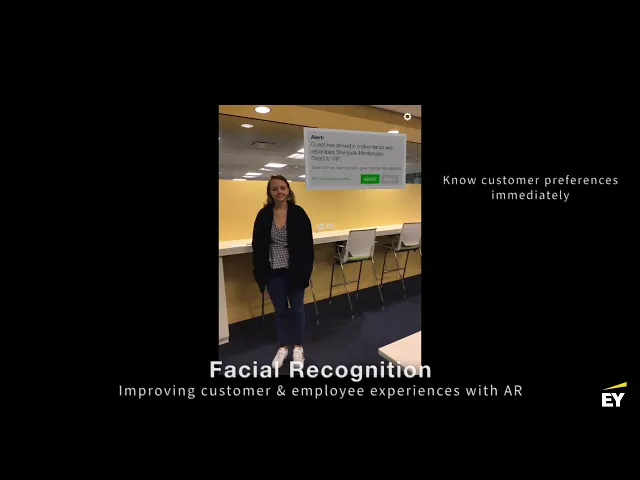
This concept was developed to showcase the potential of an Augmented Reality-enabled hotel and casino, combining AR with AI-powered cameras to capture guest trends, preferences, and activity. Guests who opt in can enjoy a fully personalized experience, while employees gain real-time insights to enhance service. We designed three interactive scenarios highlighting both employee- and guest-facing AR experiences.
Scenario 1 – Personalized Employee Assistance: Guests who opt in share their basic data and image, enabling facial recognition to alert employees when assistance is needed. Employees see a pop-up card displaying the guest’s name (with pronunciation), priority status, and tips for optimal service. Gamification elements, such as promotion points, encourage employees to actively engage with guests.
Scenario 2 – VIP Recognition for Non-Opt-In Guests: Using publicly available social media and influencer data, the system identifies high-profile guests who have not opted in. Employees receive alerts to provide VIP treatment, guided by AR wayfinding arrows if they are not nearby. Pop-up cards display the guest’s name and pronunciation, ensuring seamless, high-touch service.
Scenario 3 – Guest-Facing AR Experience: Guests can use the hotel app to scan rooms and see AR pop-ups with targeted offers based on their activity. The app includes a calendar feature that integrates AR wayfinding, allowing guests to navigate to scheduled events while discovering contextual offers along the way.
All 3D models were created in Fusion360 or sourced from a model repository, and the prototypes were developed in TorchAR. By leveraging TorchAR, we were able to rapidly deliver immersive, interactive experiences to clients, keeping costs low while providing a tangible demonstration of AR’s potential in hospitality.
Lab Walk Through
Team: Kira de Bruyn and Sharon Lee
Tools: Kuula, Insta 360 Pro, Photoshop
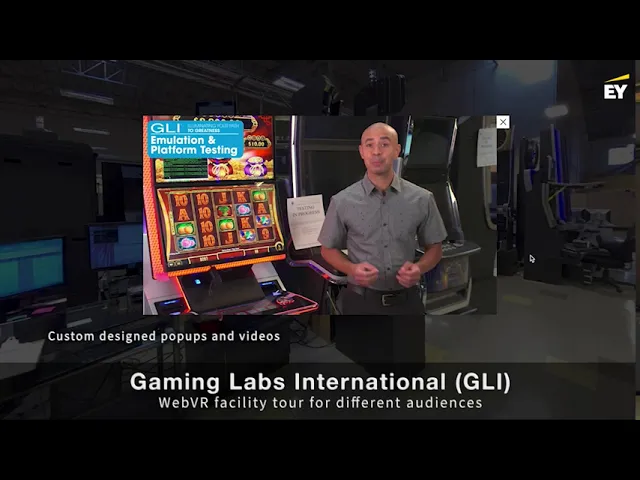
A client approached us to create a virtual tour of their lab space for visiting gaming operators, regulators, and suppliers. They were originally planning a one-day, in-person tour, but sought a more cost-effective and scalable solution. Our virtual walk-through was completed just before the COVID-19 lockdown, enabling the client to safely showcase their facility to stakeholders around the world.
We used Kuula, a lightweight VR tool that requires no development effort, to quickly create an immersive virtual experience. The space was captured using the Insta360 Pro in 8K, with Photoshop used for image editing. This approach allowed us to deliver a high-quality, interactive tour accessible on any device with an internet browser, making it highly scalable and cost-efficient for the client.
Oil and Gas Augmented Reality Visualization
Team: Kira de Bruyn and Sharon Lee
Tools: Fusion 360, Torch AR
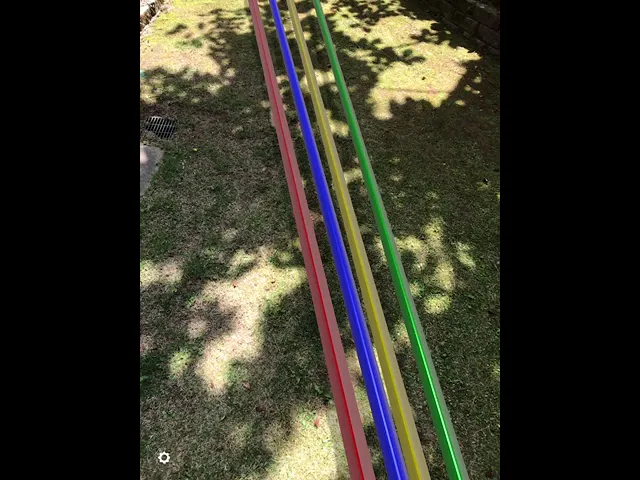
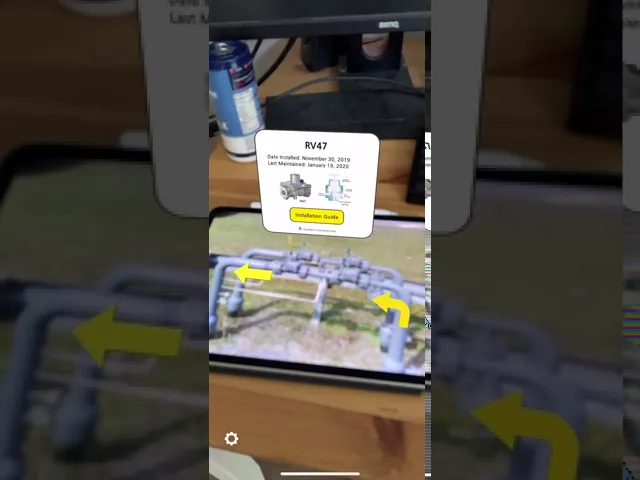
These two projects were developed to explore the potential of Augmented Reality in the oil and gas industry. Using Fusion360 to create 3D models and TorchAR for rapid prototyping, we designed two distinct use cases: one for underground pipelines and one for an above-ground regulator.
Underground Pipe Visualization: Currently, surveyors map underground pipelines before any major digging, but errors are common and can result in costly damages. Our prototype overlays 3D models of underground pipes onto the real-world environment, color-coded according to industry standards. Users can interact with the pipes to access detailed information such as material, depth, and other specifications, providing a more accurate and intuitive understanding of subsurface infrastructure.
Above-Ground Regulator Maintenance: For service and maintenance of above-ground regulators, the prototype delivers AR pop-ups that display critical information including flow direction, regulator details, and historical maintenance records. Accessible via smartphone, this tool enables service providers to work efficiently and safely by having real-time, context-specific data at their fingertips.
These prototypes demonstrate how AR can improve safety, accuracy, and efficiency in complex industrial environments.
Stocktake VR Training
Team: Kira de Bruyn and Sharon Lee
Tools: Kuula, Sketch
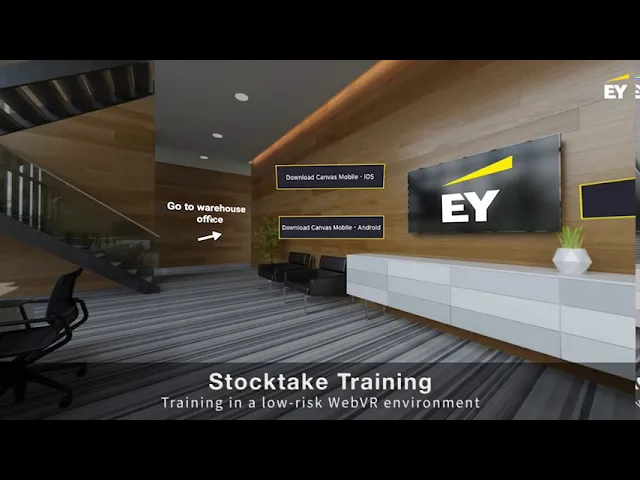
The Stocktake VR training was developed to provide new auditors with a low-risk, immersive environment to practice inventory counts before their first on-site experience. Built in Kuula using 360° stock images and delivered as WebVR, this solution offers an accessible entry point into VR without requiring specialized headsets or extensive time and financial investment.
The training guides users through every step of an inventory count, starting from their home office and moving through the client site. Interactive AR pop-ups, designed in Sketch following strict brand guidelines, provide contextual instructions at each stage. Research shows that immersive VR training leads to longer retention of information, making this approach more effective than traditional click-through modules or video tutorials.
By combining scalability, cost-efficiency, and engaging interactivity, this tool ensures that auditors are confident and well-prepared, supporting accuracy and reliability in critical inventory processes for both our business and our clients.
Organization Talent Hub
Team: Sharon Lee and Kira de Bruyn
Tools: Unity, Sketch
The Organization Talent Hub is an Oculus Go application designed to help users optimize company and team structures, ensuring the right mix of talent for maximum efficiency. Built as a VR extension of a desktop web tool—originally consisting of 2D org charts with drag-and-drop functionality—this application addresses the limitations of viewing complex data on a laptop screen.
By immersing users in a 3D environment, the VR experience transforms standard data visualization, revealing layers and connections that aren’t easily visible on a desktop. The current prototype focuses on company exploration, providing insights into employees and organizational structure, and is designed to support strategic initiatives such as mergers or acquisitions.
The experience and user journey were designed in Sketch and developed in Unity, resulting in an interactive and immersive tool that brings organizational data to life.