Safe Return

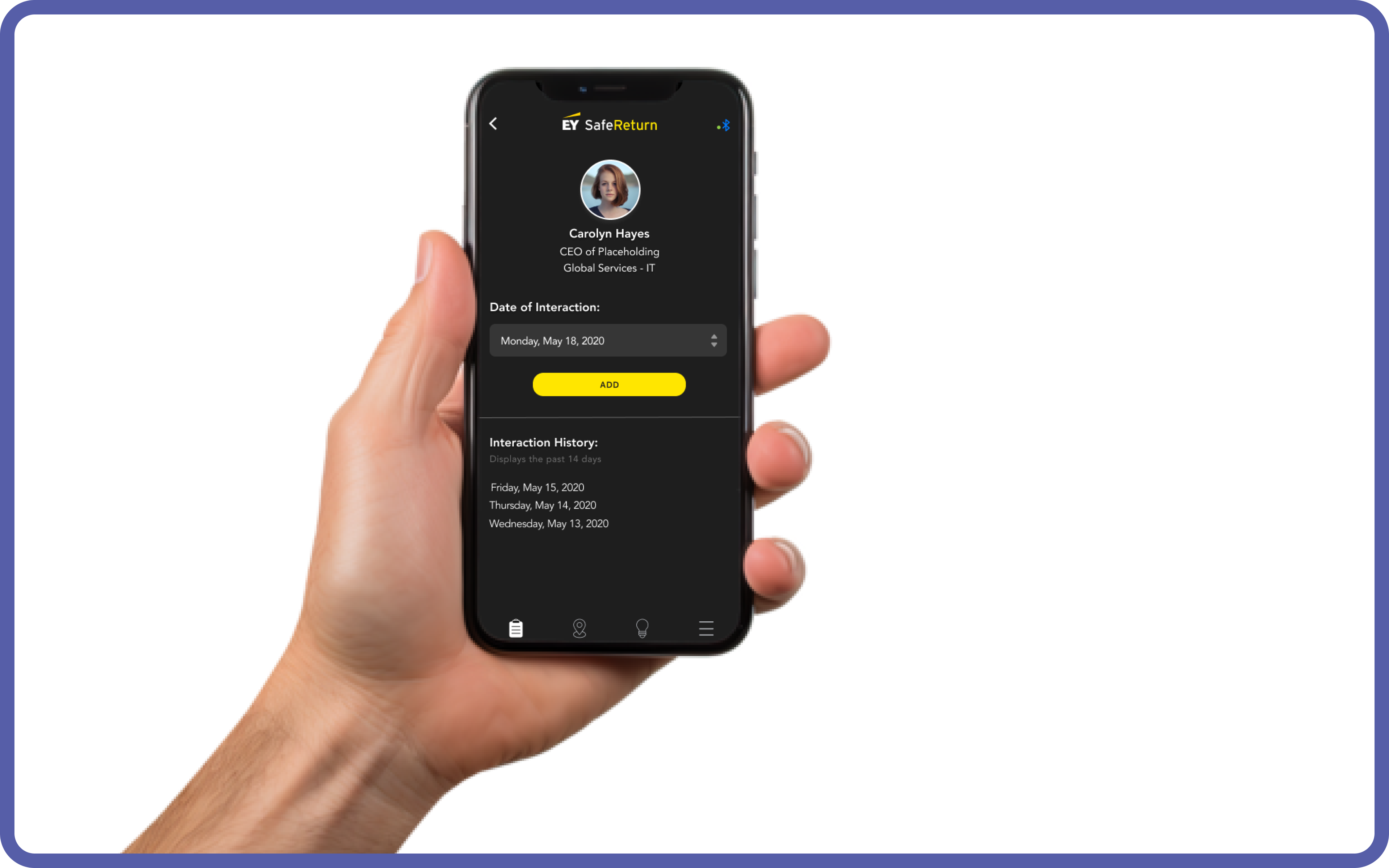
SafeReturn is a mobile application created at the height of the COVID-19 pandemic to support our organization in safely bringing employees back to physical workplaces. At a time when public health guidance was shifting daily and contact tracing technology was still new, our company needed a clear, scalable system to track employee interactions and respond quickly to potential exposures.

The app provided a secure and confidential contact tracing log that enabled employees to record interactions and receive immediate notifications if they had been exposed to someone who tested positive. For HR and operations teams, SafeReturn centralized tracking, reporting, and notifications in one tool, reduced administrative overhead while ensuring compliance with health and safety protocols.

Challenges

Challenges

  • Accelerated timeline: Needed a working product quickly to support an uncertain return-to-office schedule.

  • Evolving situation: COVID-19 guidelines and safety protocols were constantly shifting.

  • Unproven technology: Contact tracing technology (Bluetooth, logging) was still being tested and refined.

  • High stakes: The app had to be simple, accurate, and reliable — because employee health and safety were on the line.

  • Accelerated timeline: Needed a working product quickly to support an uncertain return-to-office schedule.

  • Evolving situation: COVID-19 guidelines and safety protocols were constantly shifting.

  • Unproven technology: Contact tracing technology (Bluetooth, logging) was still being tested and refined.

  • High stakes: The app had to be simple, accurate, and reliable — because employee health and safety were on the line.

My Role

My Role

I was one of two UX designers on the project, working closely with clients, business analysts, and engineers. My contributions included research, personas, sketches, wireframes, and high-fidelity prototypes, all delivered in an Agile environment (transitioning from Kanban to 2-week sprints).

I was one of two UX designers on the project, working closely with clients, business analysts, and engineers. My contributions included research, personas, sketches, wireframes, and high-fidelity prototypes, all delivered in an Agile environment (transitioning from Kanban to 2-week sprints).

The Need

The Need

When COVID-19 disrupted workplaces, employees wanted to return to the office, but health risks made it difficult to do so responsibly. Companies needed more than just a policy — they needed a practical tool that gave employees confidence their safety was being prioritized. Existing manual processes for exposure notification were slow, inconsistent, and difficult to manage at scale. At the same time, the situation was evolving daily, which meant the solution had to be flexible, simple to use, and deployable on a very short timeline. Ultimately, the need was clear: create a way to monitor exposure and notify employees quickly, while balancing privacy with safety.

When COVID-19 disrupted workplaces, employees wanted to return to the office, but health risks made it difficult to do so responsibly. Companies needed more than just a policy — they needed a practical tool that gave employees confidence their safety was being prioritized. Existing manual processes for exposure notification were slow, inconsistent, and difficult to manage at scale. At the same time, the situation was evolving daily, which meant the solution had to be flexible, simple to use, and deployable on a very short timeline. Ultimately, the need was clear: create a way to monitor exposure and notify employees quickly, while balancing privacy with safety.

The Solution

The Solution

Our team designed SafeReturn, a mobile app that turned contact tracing into an easy, intuitive process. The app allowed employees to log interactions throughout their day and receive confidential exposure notifications if they had been in contact with someone who tested positive. For HR teams, it created a streamlined way to track exposures, process reports, and communicate with staff without relying on manual spreadsheets or inconsistent processes. By starting with a lightweight MVP for manual entry and planning for Bluetooth-based automatic logging in future iterations, the solution balanced speed of delivery with long-term scalability. The result was an application that empowered employees to return to the office with greater trust, transparency, and peace of mind.

Our team designed SafeReturn, a mobile app that turned contact tracing into an easy, intuitive process. The app allowed employees to log interactions throughout their day and receive confidential exposure notifications if they had been in contact with someone who tested positive. For HR teams, it created a streamlined way to track exposures, process reports, and communicate with staff without relying on manual spreadsheets or inconsistent processes. By starting with a lightweight MVP for manual entry and planning for Bluetooth-based automatic logging in future iterations, the solution balanced speed of delivery with long-term scalability. The result was an application that empowered employees to return to the office with greater trust, transparency, and peace of mind.

Comparative Analysis

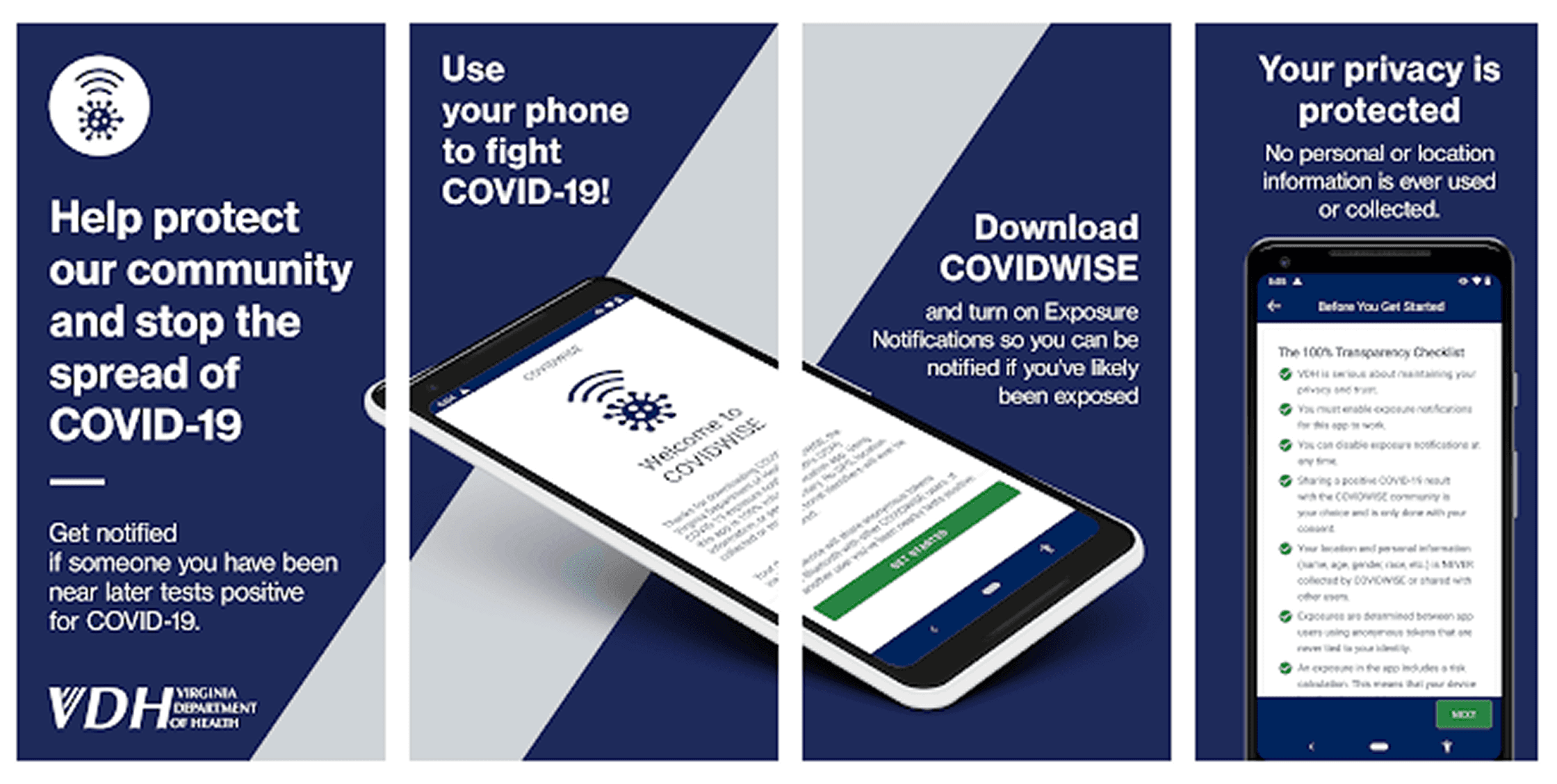
To ground our design decisions, we conducted a comparative analysis of existing contact-tracing applications. This helped us understand best practices in privacy and onboarding, the technical approaches being explored, and where gaps existed that SafeReturn could fill. While only a few public-facing solutions were available at the time, they provided valuable direction for shaping our MVP.
COVIDWISE
Developed by Apple and Google

  • Prioritizes user privacy through permission-based sharing

  • Relies on Bluetooth Low Energy to log interactions (no GPS tracking)

  • Sends anonymous notifications of potential exposure

Developed by Apple and Google

  • Prioritizes user privacy through permission-based sharing

  • Relies on Bluetooth Low Energy to log interactions (no GPS tracking)

  • Sends anonymous notifications of potential exposure

NOVID20

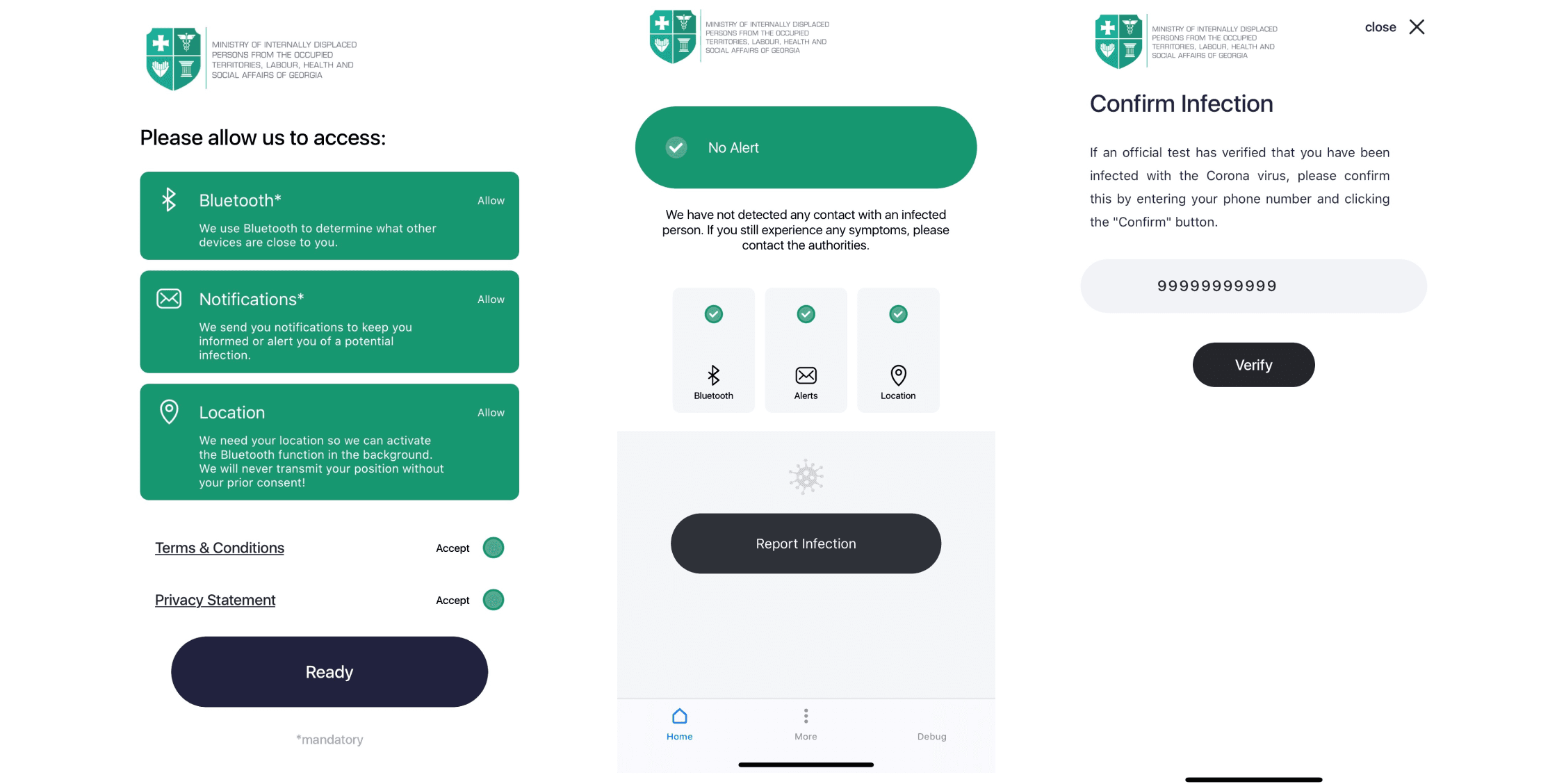
Built for the Nation of Georgia, similar to COVIDWISE

  • Uses both Bluetooth and GPS to capture and log contacts

  • Offers anonymous tracing and exposure notifications

  • Strong permissions flow that influenced our onboarding design

Built for the Nation of Georgia, similar to COVIDWISE

  • Uses both Bluetooth and GPS to capture and log contacts

  • Offers anonymous tracing and exposure notifications

  • Strong permissions flow that influenced our onboarding design

Personas

To ensure the app addressed real user needs, we developed personas that represented different employee attitudes toward returning to the office during COVID-19. These personas helped us anticipate varying levels of comfort, tech familiarity, and trust in health protocols, which directly shaped the app’s tone, onboarding, and feature priorities.

Personas were especially critical in this context because the stakes were higher than in a typical digital product—employees needed absolute clarity and confidence in how the app worked, since health and safety were on the line. They also allowed us to design for a wide spectrum of users, from those who were eager to return and highly tech-savvy to those who were hesitant, anxious, or less comfortable with mobile apps. This ensured SafeReturn would be inclusive, trustworthy, and easy to adopt across an entire workforce.
Ben

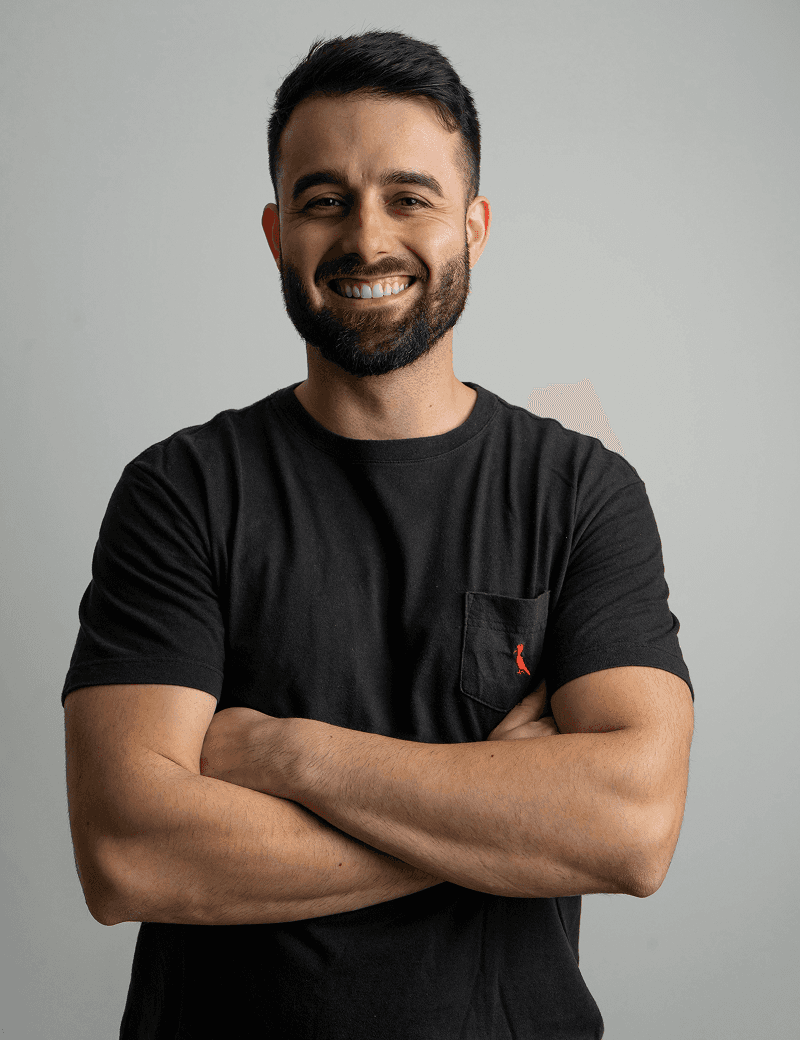
Houston, Texas Senior Consultant 25 Years Old

Lives with 2 roommates in a small apartment; finds the shared space noisy and distracting.

  • Eager to return to the office to regain focus, structure, and separation between work and personal life.

  • Health-conscious: wears a mask every time he leaves the house and follows recommended precautions.

  • Skeptical about digital contact tracing; values privacy and is wary of apps that track location.

  • Hesitant to download apps on his personal phone due to concerns about employer monitoring and data security.

  • Sees the potential benefits of technology for public health but weighs convenience against privacy risks.

Lives with 2 roommates in a small apartment; finds the shared space noisy and distracting.

  • Eager to return to the office to regain focus, structure, and separation between work and personal life.

  • Health-conscious: wears a mask every time he leaves the house and follows recommended precautions.

  • Skeptical about digital contact tracing; values privacy and is wary of apps that track location.

  • Hesitant to download apps on his personal phone due to concerns about employer monitoring and data security.

  • Sees the potential benefits of technology for public health but weighs convenience against privacy risks.

Candace

Chicago, Illinois Partner 53 years old

Lives with her husband and two children; highly focused on the health and safety of her family.

  • Excited to be back in the office and reconnect with her team in person.

  • Stays informed on the latest COVID-19 developments by reading daily articles and updates.

  • Relies on her executive assistant to manage technology; typically has apps downloaded for her rather than doing it herself.

  • Values convenience and efficiency but remains mindful of health and privacy considerations.

  • Interested in solutions that protect her family and colleagues while minimizing disruption to her work routine.

Lives with her husband and two children; highly focused on the health and safety of her family.

  • Excited to be back in the office and reconnect with her team in person.

  • Stays informed on the latest COVID-19 developments by reading daily articles and updates.

  • Relies on her executive assistant to manage technology; typically has apps downloaded for her rather than doing it herself.

  • Values convenience and efficiency but remains mindful of health and privacy considerations.

  • Interested in solutions that protect her family and colleagues while minimizing disruption to her work routine.

User Journey and Wireframes

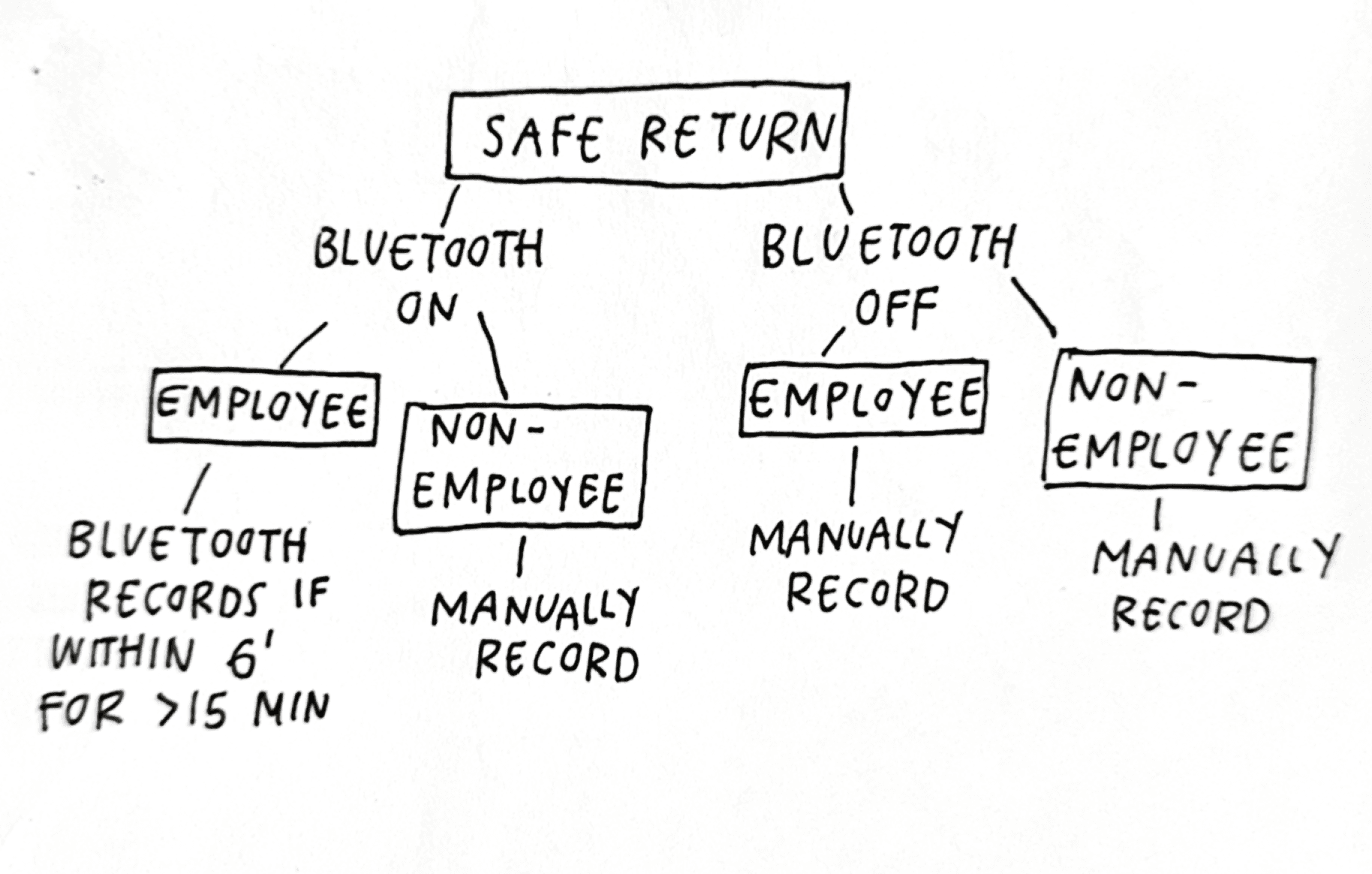
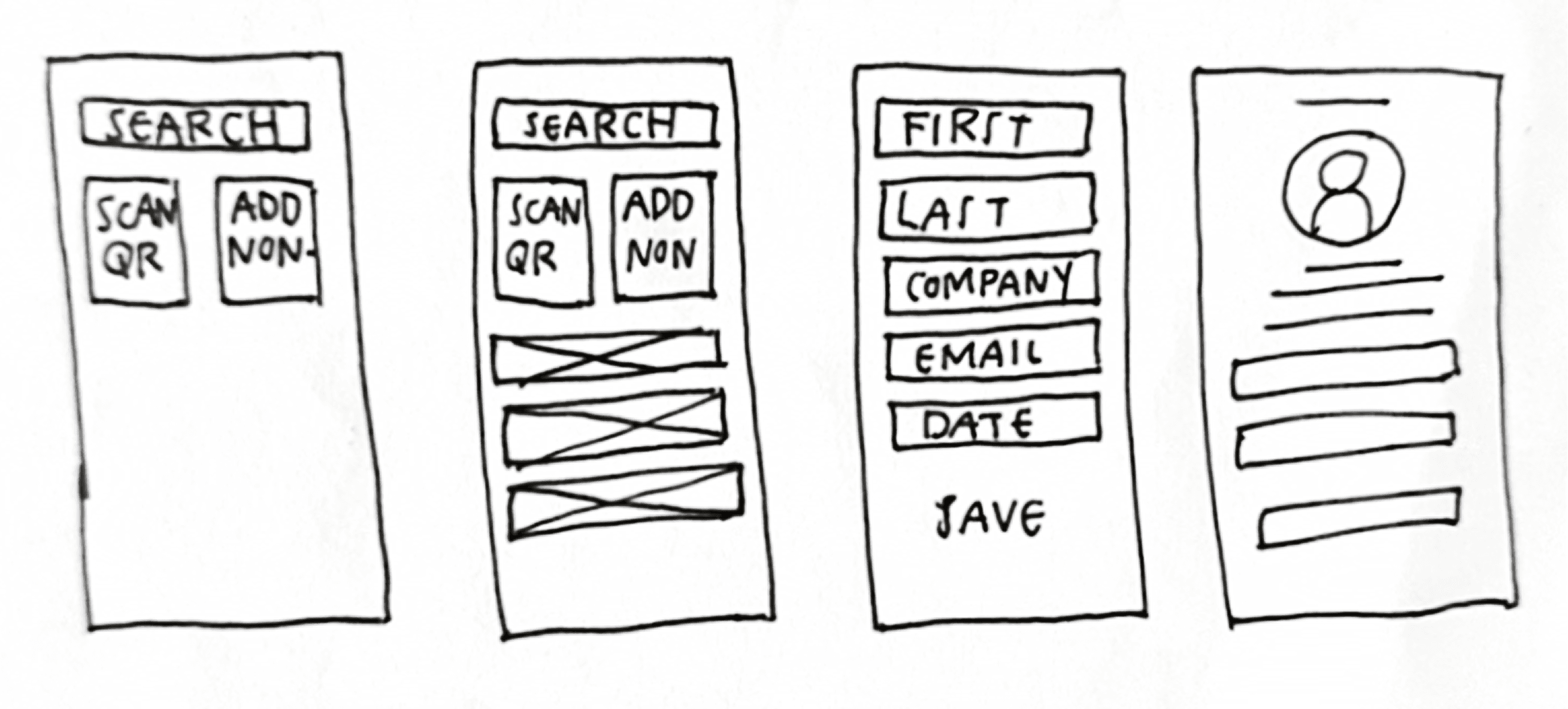
Before diving into design, we mapped out the different pathways of contact tracing to understand how users would interact with the app. Key decision points—such as whether a user enables Bluetooth and whether a contact is an internal or external employee—shaped the overall flow. This mapping informed the app’s architecture, ensuring we could design the most intuitive and seamless experience possible.

As highlighted in our personas, building user trust was a top priority. Every decision focused on creating a simple, transparent, and user-friendly interface that reassures users while guiding them through the contact tracing process.
Final Product

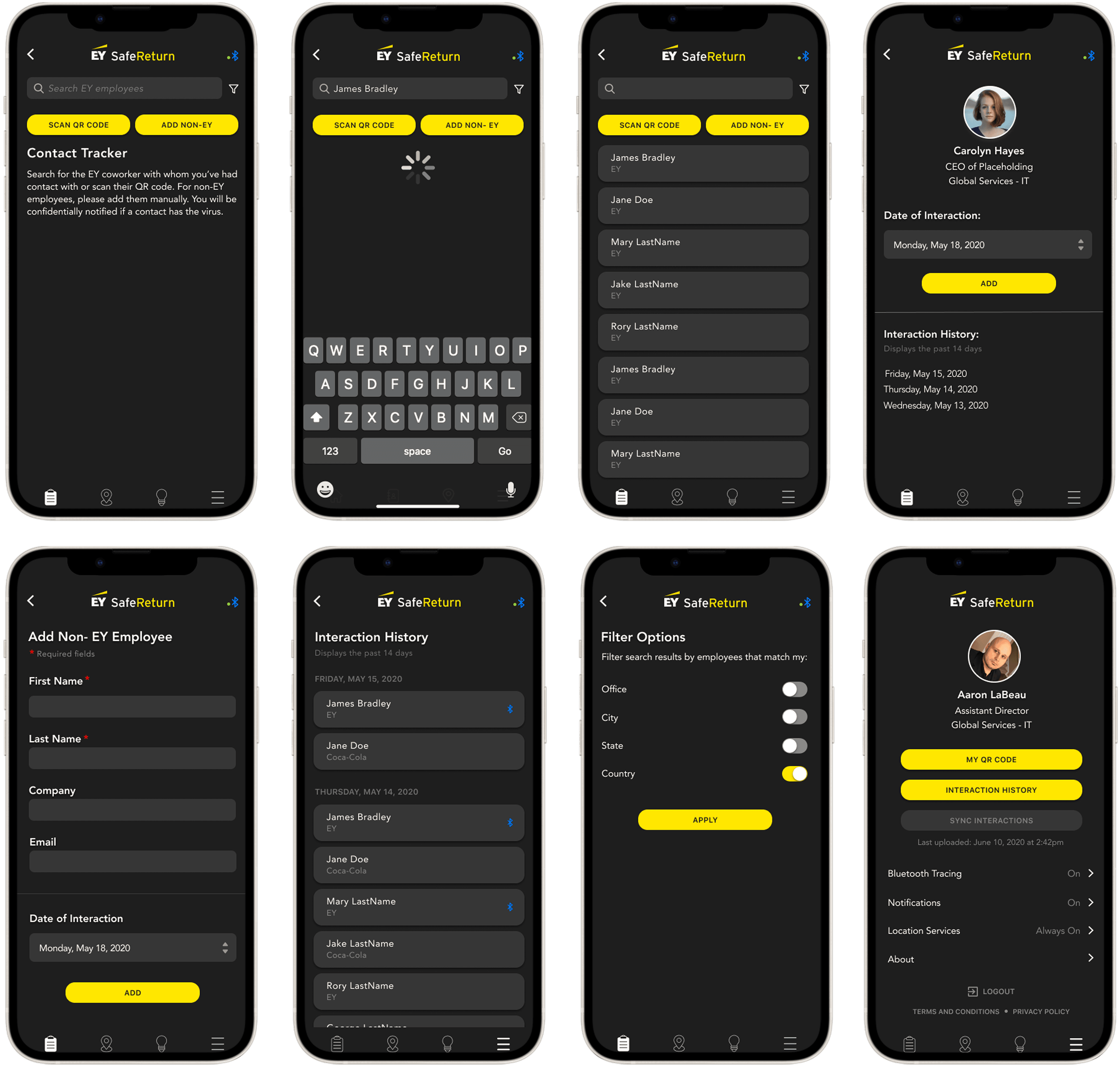
Our final design adhered to clearly defined brand guidelines while maintaining a friendly and approachable user experience. To guide users and make interactions engaging, we created a Lottie animation in After Effects for the loading screen and included step-by-step tutorials to onboard users before they enter the app.

When opening the app, users are prompted to grant permissions for Bluetooth, location tracking, and notifications. Each permission request is accompanied by a clear explanation of its value, addressing concerns around privacy and trust that we identified in our personas.

Once inside the app, employees can log contacts either manually using a QR code or automatically via Bluetooth, supporting multiple user pathways we mapped in the user journey. By combining thoughtful onboarding, intuitive flows, and privacy-conscious design, we ensured the app was both easy to use and aligned with the needs and motivations of our diverse user base.
Reflection

This project was unlike any I had tackled before. We faced an extremely tight timeline, compounded by the uncertainty of COVID-19, which meant the launch date felt like a constantly moving target. With limited time for extensive user research, we analyzed numerous existing apps to understand their successes and pain points—our goal was not to reinvent the wheel, but to build a solution that addressed real user needs efficiently.

As emphasized throughout this case study, our top priority was establishing and maintaining user trust. Given the public’s concerns around COVID-19 and data privacy, it was critical to design an app that alleviated fears and clearly communicated value while respecting user privacy.

During this project, I worked in Kanban for the first time and adapted to a more aggressive timeline than I was used to. This experience taught me the importance of flexibility, rapid iteration, and responding effectively to evolving requirements under pressure.


Quotes from our clients:


“Thank you for your hard work and dedication taking Safe Return all the way from concept to an app deployed across the US. We couldn’t have done it without you!”

“We demoed the app to the Talent team and some folks working on Canada’s RTO plan, and got a lot of positive feedback on both functionality and design. So great design work Kira de Bruyn”

Contact Me

Email: kiradebruyn3@gmail.com

Phone: 404-936-5927

Contact Me

LinkedIn

Email: kiradebruyn3@gmail.com

Phone: 404-936-5927